


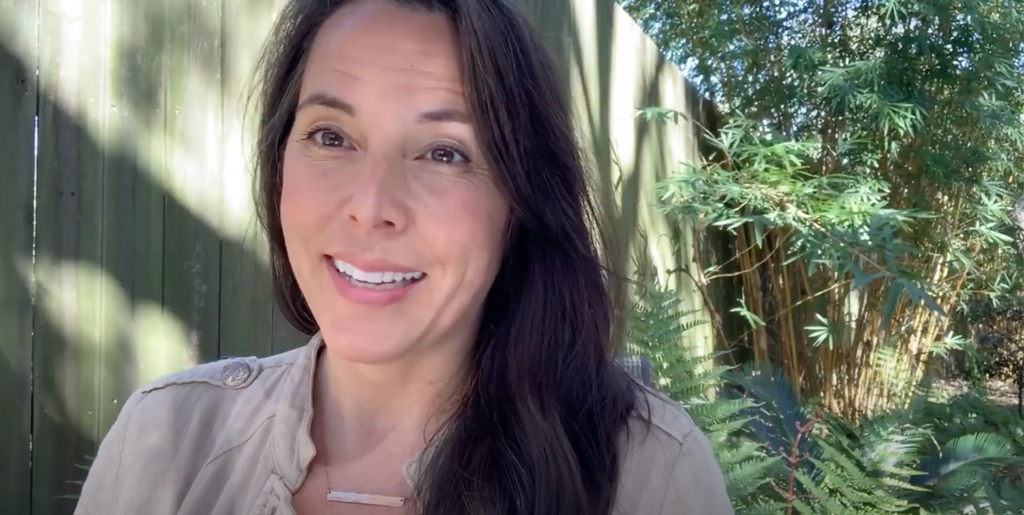
Meet Natalie, The Skincare Chef
Love + Be Well was born in 2017 when founder Natalie began reversing her MS symptoms through clean living — and realized that what she put on her body mattered just as much as what she put in it. Every product she creates carries that conviction.
Our Story
Love + Be Well was never meant to become just another skincare brand.
It began during one of the hardest seasons of my life.
In 2014, after years of unexplained symptoms, exhaustion, and feeling disconnected from my body, I was diagnosed with Multiple Sclerosis. At the time, I could barely walk or speak. My health — and honestly, my entire life — felt like it was unraveling.
So I began rebuilding.
Slowly. Intentionally. One choice at a time.
I started paying attention to everything — the food I ate, the products in our home, the stress I carried, the ingredients I placed on my skin, and the pace at which I was living.
And little by little, things began to change.
—
“Sometimes healing begins by slowing down enough to listen.”
—
What started as a deeply personal healing journey became a complete shift in how I viewed wellness.
I fell in love with real food.
With slower living.
With ingredients I could recognize.
With nourishing instead of depriving.
And naturally, skincare became part of that conversation.
At the time, I struggled to find products that felt truly clean, beautiful, and luxurious all at once. Many products claiming to be natural were still filled with synthetic fragrance, preservatives, fillers, and ingredients I didn’t trust.
So I started making my own.
In my kitchen.
For myself.
For my family.
Formulating skincare began to feel less like chemistry and more like cooking — blending botanical oils, probiotics, superfoods, herbs, and nutrient-rich ingredients together in ways that felt nourishing, comforting, and alive.
That was the beginning of Love + Be Well.
—
“Beauty does not need to be rushed.”
—
To this day, every product we create is rooted in the belief that skincare should nourish the skin the same way good food nourishes the body.
Simple ingredients.
Intentional formulations.
Small batches made by hand.
Our products are crafted with probiotics, botanical oils, plant-based ingredients, and skin-loving nutrients chosen to support healthy, glowing skin at every age.
No unnecessary fillers.
No harsh alcohols.
No synthetic fragrance.
No shortcuts.
Just thoughtful skincare made slowly and with care in our Virginia studio.
—
“Come home to yourself.”
—
As I’ve grown older, so has this brand.
And somewhere along the way, I realized I no longer wanted skincare rooted in fear, perfection, or chasing youth.
I wanted something softer.
Something more grounded.
Love + Be Well exists to support women in feeling radiant, healthy, confident, and comfortable in their skin — not despite aging, but alongside it.
We believe beauty deepens with time.
That slowing down is powerful.
That caring for yourself is never vanity.
And that glowing skin begins with how we live, not just what we apply.
—
“Skincare inspired by nourishment, not perfection.”
—
Everything we create is still made in small batches by us and shipped directly from our studio to your home.
This brand is deeply personal.
It holds pieces of my story, my healing journey, my family, my kitchen, my years of learning, and my belief that wellness should feel beautiful — not overwhelming.
Whether you found us searching for cleaner skincare, graceful aging support, probiotics, or simply a quieter way to care for yourself…
I’m so glad you’re here.
Love + Be Well,
Founder | The Skincare Chef

From the Be Well Blog

Use the Good Stuff The Art of Enough · Part Three
I have always been a saver of beautiful things.
The good dishes. The linen napkins. A candle that smells too wonderful to burn on an ordinary Tuesday. The expensive olive oil tucked in the back of the pantry. A dress waiting for somewhere worthy enough to wear it.
We save things because they feel special.
And somewhere along the way, we start believing that special things require special occasions.
I’m not so sure anymore.
The older I get, the more I think being here is the occasion.
What Exactly Are We Saving It For?
I remember generations before us having entire cabinets filled with things that were rarely touched.
The china.
The crystal.
The silver.
Beautiful things carefully protected for company, holidays, or some occasion important enough to justify using them.
I understand it. There was care in that. Pride, too.
But I also think about how many of those beautiful things spent most of their lives behind a cabinet door.
And I find myself asking:
What were we waiting for?
Because eventually the linens yellow. The candle loses its scent. The beautiful ingredient expires. Our bodies change and the dress no longer fits.
Sometimes the thing we were protecting never gets to do the very thing it was made to do.
Ordinary Days Are Most of Our Lives
This may be what has changed most for me as I’ve gotten older.
I used to think of life as the big moments with everything else happening in between.
Now I think almost the opposite.
The in-between is the life.
Making dinner with Mitch.
Drinking coffee from a cup I love.
Putting flowers on the table even when no one is coming over.
Cooking something beautiful on a Wednesday simply because we’re hungry.
Lighting the candle at four in the afternoon.
Using the linen napkin instead of reaching for a paper one.
These moments aren’t filler between the important parts.
They are the important parts.
Beautiful Things Should Have a Life
I don’t want to own things I’m afraid to use.
I want scratches on the serving boards.
Stains on the linen.
Recipes splattered across the cookbook.
I want the good dishes to eventually show evidence of hundreds of dinners.
Because that means we used them.
We gathered around them.
We lived with them.
There’s something very different about caring for something and preserving it so carefully that you never actually enjoy it.
I want to take care of the things I have.
But I also want them to participate in my life.
This Goes Beyond Things
I think we save more than dishes.
We save experiences.
The restaurant for an anniversary.
The trip for someday.
The idea we keep talking about.
The afternoon we’d love to take off when things finally settle down.
The gathering we want to host when the house is finished, the garden looks better, or life becomes a little less busy.
There is always a reason to wait.
And increasingly, I’m suspicious of someday.
Not because everything needs to happen now.
But because I know how quickly now becomes then.
Use It
So this is something I’m practicing.
Use the good olive oil.
Burn the candle.
Wear the dress.
Put dinner on the pretty plate.
Open the linen napkins.
Invite people over before everything is perfect.
Order dessert.
Sit outside a little longer.
Use what you have while you’re here to enjoy it.
Maybe The Art of Enough isn’t only about recognizing that we already have enough.
Maybe it’s also about allowing ourselves to fully enjoy what we already have.
The good stuff was never meant for someday.
It was meant for the life we’re living now.

The Things We Keep The Art of Enough · Part Two
I have things in my house that would mean absolutely nothing to anyone else.
A worn recipe card in handwriting I recognize immediately. A bowl that belonged to someone I loved. A chipped plate I still reach for even though there are perfectly good ones sitting beside it.
None of these things are particularly valuable.
And yet, they are priceless to me.
I think that distinction matters.
We live in a time when we’re constantly encouraged to clear things out. Edit. Organize. Declutter. Get rid of anything we haven’t used in a year. Make room for something newer, prettier, more current.
And while I certainly understand the relief of clearing out what we no longer need, I’ve realized I don’t want a life completely edited of its history.
I want some things to stay.
A Home Should Hold a Little History
I love walking into a home and being able to tell that someone actually lives there.
Not because it’s perfectly styled, but because there are clues.
The cookbook with the broken spine because it always opens to the same recipe. The wooden spoon that has darkened with years of use. The stack of mismatched bowls collected over time. The chair that probably should have been recovered ten years ago but somehow still belongs exactly where it is.
Those things make a home feel like a life has happened there.
I’ve never wanted my home to look as though everything arrived on the same delivery truck.
I want layers.
Things from my childhood beside something Mitch and I found together. Something inexpensive next to something beautiful I saved for. A piece passed down from family sitting beside something one of my children made years ago.
That mixture feels like us.
Keeping Is Different From Collecting
The older I get, the more interested I am in the difference between having things and keeping things.
Having can be about acquiring.
Keeping is about relationship.
We keep something because it carries a story. Because our hands know it. Because seeing it reminds us of a person, a place, a season of our lives.
Sometimes the reason doesn’t even make much sense.
You just know you’re not ready to let it go.
I think we should trust that a little more.
Not everything needs to justify the space it occupies by being useful or valuable. Some things earn their place simply because they connect us to who we have been.
Enough Isn’t Minimalism
When I started thinking about The Art of Enough, I knew I didn’t want this to become a conversation about minimalism.
That isn’t what enough means to me.
I like beautiful things. I like setting a table. I like old dishes and linens and cookbooks and objects with patina. I like a kitchen that looks like someone has been cooking in it.
Enough isn’t an empty shelf.
It’s knowing the difference between something that adds meaning to your life and something that is simply taking up space.
That distinction has become much clearer to me with age.
I’m less interested in having more just because something is new.
I’m much more interested in taking care of what has already earned a place here.
Maybe That’s the Point
One day, someone else may hold the things I’m using now.
Maybe one of my children will reach for one of my bowls and remember Sunday dinners. Maybe a recipe card in my handwriting will end up tucked inside someone else’s kitchen drawer. Maybe something completely ordinary to me today will become meaningful to someone I love.
There’s something beautiful about that.
Our belongings can become little witnesses to our lives.
They were there for the dinners, the birthdays, the ordinary Tuesday mornings, the people gathered around the table.
So yes, clear out what no longer belongs.
Let things go when their season with you is finished.
But keep the things that still tell a story.
Use them. Care for them. Let them show their age.
A meaningful life doesn’t have to be perfectly edited.
Sometimes enough looks like a chipped plate you’ve had for twenty years—and still choosing it from the cupboard.
xo,
natalie

When the Season Changes, the Body Notices
Every October, I feel the shift.
The mornings are darker. The air changes. The days get shorter almost without us noticing. We start closing the windows, reaching for sweaters, making soup instead of salads and turning inward a little earlier in the evening.
I love this time of year.
But my body doesn’t always love the transition quite as much as I do.
I didn’t always notice it this way.
For years, we lived in Charleston, where there was more warmth and sunlight throughout the year. I don’t remember experiencing this same seasonal shift in my body there.
We eventually moved back to Virginia to care for our aging parents. And somewhere along the way, as I readjusted to four very distinct seasons, I began noticing a pattern.
Every fall, my body seems to notice the change before my mind does.
And even now, I have to remind myself of it.
It’s October. The light is changing. The temperature is changing. Your body is adjusting, too.
Living with an autoimmune disease has made me incredibly aware of the ways our bodies respond to things we don’t necessarily think about.
We tend to think of seasons as something happening outside of us.
The leaves change.
The temperature drops.
The light disappears earlier.
But we’re changing right along with it.
Our bodies are seasonal, too.
October changes more than the view outside the window.
We get less daylight. Temperatures can swing dramatically from morning to afternoon. We spend more time indoors. Cold and flu season begins creeping in. Our sleep patterns can shift. We may move less, get less sunlight and naturally start craving more rest.
All of those things require the body to adapt.
And when you live with an autoimmune condition, sometimes you feel that adaptation more.
For me, it can show up as fatigue. That familiar feeling that my battery isn’t holding quite the same charge. Sometimes old symptoms become a little louder. My body asks for more rest than my mind thinks I should need.
My first instinct can still be to wonder what’s wrong.
Then I remind myself: I’ve felt this shift before.
Sometimes my body is simply working harder to adjust.
Less light matters.
One of the biggest changes happening in October is something incredibly basic: sunlight.
Morning light helps set our circadian rhythm—the internal clock involved in sleep, hormones, energy and many other processes throughout the body.
As the days shorten, the timing and amount of light we’re exposed to changes. We may also spend considerably less time outdoors.
Vitamin D enters the conversation here too. Sunlight helps our bodies produce vitamin D, which plays an important role in normal immune function. But seasonal changes in how we feel can’t simply be blamed on vitamin D.
The relationship between sunlight, our internal clocks, sleep and the immune system is much more complicated than that.
Having lived somewhere with abundant sunshine and now somewhere with four very distinct seasons, I can’t help but notice the difference in my own body.
Maybe that’s why October catches me off guard.
I can know what’s happening intellectually and still wake up one morning wondering why I suddenly feel so tired.
Then comes everything else.
Fall also means more respiratory viruses circulating.
The air becomes cooler and drier. Indoor heat starts coming on. Our skin and mucous membranes can become drier. Sleep can change. We start spending more time inside.
And then there’s life.
Schedules fill up. The holidays start appearing on the calendar. There are things to do, people to care for, businesses to run, families to tend to.
Meanwhile, nature seems to be doing the exact opposite.
Slow down.
Get darker.
Rest.
There’s something worth noticing in that contradiction.
We expect ourselves to operate at exactly the same speed in July, October and January.
Our bodies may not agree.
A flare isn’t always a flare.
This is something I’ve had to learn through living with MS.
Feeling different doesn’t automatically mean my disease is progressing or that something new is happening.
Things like illness, temperature changes, exhaustion, dehydration, stress and poor sleep can temporarily make old MS symptoms more noticeable. The nervous system can simply have less reserve.
Learning that has changed the way I respond to my body.
I try to pay attention without immediately becoming afraid of what I’m feeling.
Of course, genuinely new or significantly worsening neurological symptoms deserve a conversation with your medical team. Listening to your body doesn’t mean ignoring something important.
It means learning its language.
This is my reminder, too.
I wish I could say that after all these years I immediately recognize what’s happening.
I don’t.
Every fall, I seem to have a moment when I wonder why I’m more tired. Why my body feels different. Why something that felt easy a month ago suddenly requires a little more from me.
And then I remember.
You’ve been here before.
The season changed.
Give your body a minute to catch up.
So I get outside in the morning.
I open the blinds and let the light in.
I walk.
I feed myself warming, nourishing food.
I protect my sleep.
I drink water.
And when my body tells me it needs more rest, I try to listen instead of arguing with it.
There’s something interesting about having moved home to care for our aging parents while, at the same time, learning how to care for myself through another season of my own life.
Maybe that’s part of what aging has taught me.
Pay attention to the patterns.
Know your body.
And don’t assume every difficult day means something is wrong.
The trees aren’t fighting to hold onto summer.
Maybe we don’t have to either.
There is a season for expanding and a season for coming inward. A season for long days and a season for earlier nights.
Our bodies are part of nature, too.
And perhaps one of the kindest things we can do as the season changes is allow ourselves to change with it.
— Natalie
From the Be Well Kitchen

Roasted Butternut Squash Pasta with Goat Cheese + Crispy Sage
There are certain dinners that taste like the season they belong to. This is one of them.
Roasting the butternut squash first brings out its natural sweetness and gives this sauce so much more depth. Shallot, garlic, red pepper and nutmeg make it savory, a little Dijon cuts through the sweetness, and goat cheese melts in for creaminess and just enough tang.
No heavy cream. No complicated cheese sauce. Just real ingredients blended into something ridiculously creamy.
And because this is From the Table, there’s always something in the bowl feeding your glow, too.
Ingredients
- 12 oz pasta
- 2 cups butternut squash, peeled + cubed
- 1–2 tbsp extra virgin olive oil
- 1 shallot, finely chopped
- 3 cloves garlic, minced
- ½ tsp red pepper flakes, or to taste
- ¼ tsp ground nutmeg
- 1–1½ cups chicken or vegetable broth
- 2–3 oz goat cheese
- 1–2 tsp Dijon mustard
- 1 tbsp nutritional yeast
- Juice of ½ lemon
- 6–8 fresh sage leaves
- Sea salt
- Freshly cracked black pepper
- Reserved pasta water
From the Table
Heat oven to 425°F.
Toss the butternut squash with olive oil, sea salt and black pepper. Spread onto a baking sheet and roast for 25–30 minutes, until completely tender with caramelized edges.
Meanwhile, cook the pasta until just al dente. Before draining, reserve about 1 cup of the pasta water.
While the pasta cooks, warm a little olive oil in a skillet. Add the shallot and sauté until soft and beginning to caramelize. Add the garlic, red pepper flakes and nutmeg and cook for another 30–60 seconds, just until fragrant.
Add the roasted squash, sautéed shallot mixture and about 1 cup of broth to a blender. Blend until completely smooth and velvety.
Pour the sauce back into the skillet over low heat. Stir in the goat cheese, Dijon and nutritional yeast until everything melts together.
Add the cooked pasta and toss until coated, adding a splash of reserved pasta water as needed. You want the sauce silky and loose enough to settle into every little pocket of pasta.
For the sage, heat a small drizzle of olive oil in a skillet and add the leaves. Cook briefly until fragrant and crisp.
Finish the pasta with fresh lemon juice, lots of cracked black pepper and the crispy sage.
Serve immediately.
Feed Your Glow
Butternut squash brings beta-carotene, which the body converts to vitamin A—a nutrient important for normal skin-cell growth and maintenance. It also provides vitamin C, an essential nutrient for normal collagen production.
Extra virgin olive oil gives the dish monounsaturated fats and antioxidant plant compounds. Fat also helps your body absorb fat-soluble carotenoids from foods like squash.
Garlic + shallot add more than flavor. They contain sulfur compounds and antioxidant plant compounds, making them an easy way to layer more phytonutrients into an everyday meal.
Sage may only be the finishing touch, but herbs are one of our favorite ways to add flavor and plant compounds without needing much of anything else.
And the goat cheese? That one’s partly there because dinner should taste really good, too.
Easy Swaps
- No goat cheese? Try a little feta for a saltier finish, or leave the cheese out and add another spoonful of nutritional yeast.
- Gluten-free? Use your favorite gluten-free pasta.
- Want more protein? Add browned grass-fed ground beef, Italian chicken sausage or white beans.
- No nutritional yeast? Leave it out. The sauce will still be delicious.
- Want it dairy-free? Skip the goat cheese and increase the nutritional yeast slightly for extra savory depth.
- No fresh sage? Fresh thyme or rosemary works beautifully with roasted squash.
- More heat? Be generous with the red pepper flakes.
- Thicker sauce? Use less broth. Silkier sauce? Add pasta water a splash at a time.
FROM THE TABLE
Good food. Good skin. Same philosophy.
Feed your glow.
-Natalie

Baked Cinnamon Pears
Warm pears, maple, vanilla + a little something creamy.
This is exactly the kind of dessert I love. Warm, cozy, not overly sweet, and made from ingredients that happen to give something back. The pears get soft and caramelized in the oven with butter, maple, brown sugar and vanilla, then I finish them with cold yogurt and toasted walnuts.
Dessert, yes. But very much a feed your glow kind of dessert.
Baked Cinnamon Pears
Serves 4
You’ll need:
- 4 ripe but still firm pears
- 2 tablespoons grass-fed butter, melted
- 2 tablespoons pure maple syrup
- 1 tablespoon brown sugar
- 1 teaspoon vanilla extract
- 1 teaspoon cinnamon
- Pinch of sea salt
- Plain Greek yogurt, for serving
- Chopped walnuts, for serving
- Extra maple syrup, optional
Heat the oven to 375°F.
Cut the pears in half and scoop out the cores. Arrange them cut-side up in a baking dish.
Mix the melted butter, maple syrup, brown sugar, vanilla, cinnamon and sea salt. Spoon it generously over the pears, letting some settle into the centers.
Bake for 25–35 minutes, depending on the ripeness of your pears, spooning some of the buttery maple juices over them once or twice while they bake. They’re ready when tender and beautifully caramelized around the edges.
Serve warm with a generous spoonful of cold Greek yogurt, chopped walnuts and, if you want it, one last drizzle of maple.
Easy Swaps
No Greek yogurt? Try coconut yogurt, skyr or mascarpone. Pecans are beautiful in place of walnuts. You can skip the brown sugar and use a little more maple for a less-sweet version, or swap the butter for ghee or coconut oil. And if you have apples sitting on the counter, use those—the same recipe works beautifully.
Why I call this glow food
Pears bring fiber and vitamin C. Walnuts add plant-based omega-3 fats, vitamin E and a little protein. Greek yogurt brings protein and, when you choose one with live cultures, probiotics. Cinnamon gives all that warmth and flavor without needing loads of added sugar.
And there’s something to be said for dessert built around the fruit bowl rather than something from a package.
Feed your skin. Feed your body. Enjoy dessert. All of it gets to belong at the same table.
Love + Eat Well,
— Natalie

Lemony Cannellini Beans with Tomato + Arugula
Creamy cannellini beans simmered with fresh tomato, garlic and shallot, finished with peppery arugula, basil, Parmesan and plenty of lemon. Cozy enough for dinner, but bright enough to make year-round.
Serves 3–4
Ingredients
2 tablespoons extra virgin olive oil
1 tablespoon butter
1 shallot, finely chopped
3 garlic cloves, minced
1 large ripe tomato, chopped
2 cans cannellini beans, drained and rinsed
1 to 1½ cups chicken broth
½ teaspoon sea salt, plus more to taste
Freshly ground black pepper
¼ teaspoon red chili flakes, or to taste
2 generous handfuls fresh arugula
¼ cup freshly grated Parmesan, plus more for serving
Juice of ½ lemon
Handful fresh basil, torn
Make It
Warm the olive oil and butter in a wide skillet or shallow pot over medium-low heat. Add the shallot and cook until tender and translucent.
Add the garlic and chili flakes and cook for about 30 seconds, just until fragrant.
Stir in the chopped tomato with a pinch of salt and black pepper. Let it cook for a few minutes until the tomato begins to soften and release its juices.
Add the cannellini beans and 1 cup of the chicken broth. Bring to a gentle simmer and cook uncovered for 10–15 minutes, adding a little more broth as needed. Mash a small spoonful of the beans against the side of the pan and stir them back in to give the broth a naturally creamy texture.
Fold in the arugula and let it wilt into the warm beans.
Turn off the heat and stir in the Parmesan, fresh lemon juice and torn basil. Taste and adjust with more salt, pepper, chili or lemon.
Spoon into shallow bowls and finish with a drizzle of good olive oil, more Parmesan and fresh basil.
Glow Notes
Cannellini beans bring plant-based protein, fiber and minerals to the bowl, while tomatoes, arugula, garlic, herbs and olive oil layer in colorful plant compounds. It’s the kind of meal we love most—real ingredients cooked together into something deeply satisfying.
From the Table: Serve on its own, spoon over a thick piece of toasted sourdough, or add a jammy egg for an even heartier meal.
Love + Eat Well,
by Natalie


